
Join AAIDN in June 2027 for the Black and Green Heritage Tour of Ireland
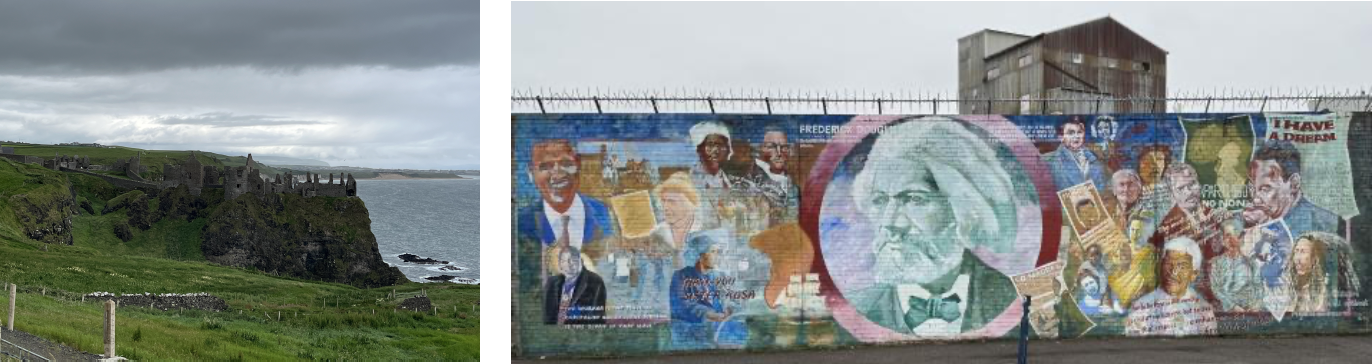
In 1845, a young man who had escaped slavery in Maryland just seven years earlier arrived in Dublin. Frederick Douglass had crossed the Atlantic partly to stay beyond the reach of those who would have returned him to bondage. He left calling the visit transformative: in Ireland, he wrote, he felt treated as a man rather than judged by his color.
Next June, you can follow in his footsteps. This nine-day journey, organized by the African American Irish Diaspora Network with CIE Tours, traces the remarkable and often surprising connections between Black and Irish histories: abolitionists and activists, performers and campaigners, and two peoples whose struggles for freedom have echoed across the Atlantic for more than two centuries.
Travel with Scholars
What sets this tour apart is the company you'll keep. From the moment you gather at Dublin Airport, you'll be accompanied by three distinguished historians of race, migration and Ireland: Professors Kimberly DaCosta, Christine Kinealy and Miriam Nyhan Grey. They'll introduce the story over breakfast on your first morning, and throughout the week they'll lead the evening conversations and reflections that turn a beautiful trip into a meaningful one.
Belfast: Murals, Memory and Douglass
Your journey begins in Belfast's Linen Quarter, where a welcome drink and dinner lead into a lively discussion of Northern Ireland's civil rights movement and its ties to the Black freedom struggle in the United States.
Next day, a guided tour takes in the city's political murals and the Peace Wall before you stand before the bronze statue of Frederick Douglass on Rosemary Street, beside the First Presbyterian Church where he lectured. Here you'll also meet Olaudah Equiano, the formerly enslaved writer and abolitionist who visited Belfast more than fifty years before Douglass and found friends among its radical reformers. An optional walking tour of Douglass's Belfast and a talk by a local scholar round out the day.
Derry: Two Bloody Sundays
In Derry, a local guide leads you past the Guildhall, St Columb's Cathedral, the Diamond and the city's historic walls. Then comes one of the tour's most moving moments: a walk across the Peace Bridge, retracing the steps of John Hume and Congressman John Lewis. Your guides will draw out the parallels between Selma's Bloody Sunday in 1965 and Derry's in 1972, and that evening you'll reflect together on the bonds between African American and Irish campaigns for civil rights.
The Wild West of Ireland
The pace softens as you cross Donegal's dramatic landscapes and visit Atlantic Sheepdogs in County Sligo to watch working dogs in action. By evening you'll reach Westport, one of Ireland's few planned towns, with its tree-lined Mall and stone bridges. After dinner and traditional music, you'll hear about Ira Aldridge, the Black New Yorker who became the nineteenth century's leading Shakespearean actor and performed in Westport and small towns across the west. A walking tour and a free afternoon leave time to explore beneath the gaze of Croagh Patrick.
Strokestown: The Famine's Long Shadow
Heading east, you'll visit Strokestown Park House in County Roscommon, where a landlord's mansion stands in stark contrast to the National Famine Museum in its grounds. Here you'll learn the story of the 1,490 tenants sent to Canada in 1847, many of whom never survived the journey, and the work underway to commemorate their route.
Dublin: Douglass's City
Your final days are spent in Dublin, near to the Phoenix Park. After a visit to the Guinness Storehouse and a free evening, you'll follow Douglass through the city to City Hall, the Mansion House and Merrion Square, and visit the National Library of Ireland as guests of the director. At EPIC The Irish Emigration Museum, you'll discover how Irish people and culture spread across the globe.
Your last night is a celebration: a dinner of Irish specialties with traditional music, song and step dancing, alongside the stories of Black artists who made their mark in Ireland, from eighteenth-century singer Rachel Baptiste and the dancer Master Juba to Elizabeth Taylor Greenfield, Paul Robeson and Phil Lynott.
Join Us
This is a journey for anyone who believes history is best understood side by side, and best of all in the places where it happened. Whether you're tracing your own roots, deepening a lifelong interest or discovering these connections for the first time, you'll come home with new friends and a fresh way of seeing both Ireland and America. To reserve your place now, contact CIE Tours at groups@cietours.com, quoting itinerary#645433.