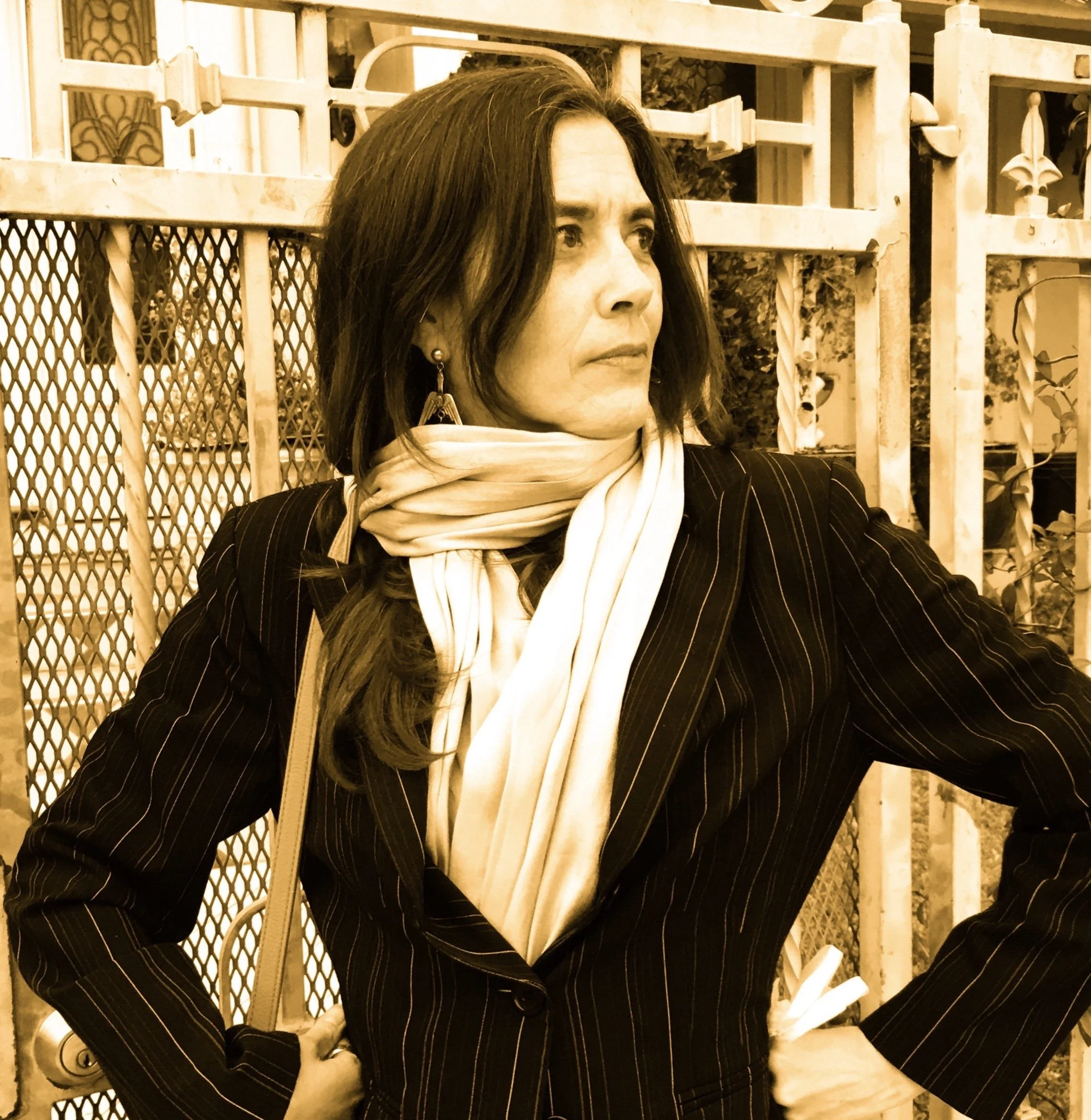
Alison Hart Shares Her Black & Irish Story: “There Are No Heroes In My Books. Everybody’s A Mess.”
By Cíara Emmanuel
December 15th, 2025

“It's a way for me to almost build a cosmology.” Starry-eyed and visionary, Alison Hart still keeps both feet on the ground. “Writing to get the roots, that's the impetus of the first book,” she shares.
Upon releasing her second novel, The In-Between Sky (2025), author Alison Hart recalls the story of her first: Mostly White (2018). “It was really a love letter to my mom,” Hart reveals. “She was a writer, a scholar, a poet, and she couldn't write about her family. It was too painful.”
Alison Hart’s Mostly White has struck many since its release and has continued to achieve significant praise by legendary authors such as the remarkable Isabel Allende, and Lucille Lang Day, who opens the novel herself with words of acknowledgement: “Alison Hart’s debut novel, Mostly White, spans five generations and about one hundred years in a family with Native American, African American, and Irish roots. It is a uniquely American story showing how people from the cultures and traditions of three continents found themselves together in the North American wilderness, sometimes in conflict and misunderstanding but other times in cooperation and love. [...] Hart has written a great American epic, which should be read and discussed for many generations to come.” - Lucille Lang Day
“The way that I personally navigate my life is I'm very comfortable on the circumference,” says Hart. “And I'm fine with it, you know? And sometimes, I'm the center, if I'm invited in, right? Or, if I'm in a mixed space, or if I'm sharing my work, I feel like I'm centered.” Amphibious in nature, Alison carries a kaleidoscope of identities in her pocket. “I sort of dropped my last name and kept the middle name,” she shares. “I call myself an ambivert, because I really am an introvert. But there is a part of me that wants to be out. There is that part that dances or sings, or when I give readings...” That is, until the writer has been “too out”, in which case, her friends don’t see her for a while. “I'm like, ‘Look, I gotta charge up here.’ Plug in the battery, yeah?” she laughs.
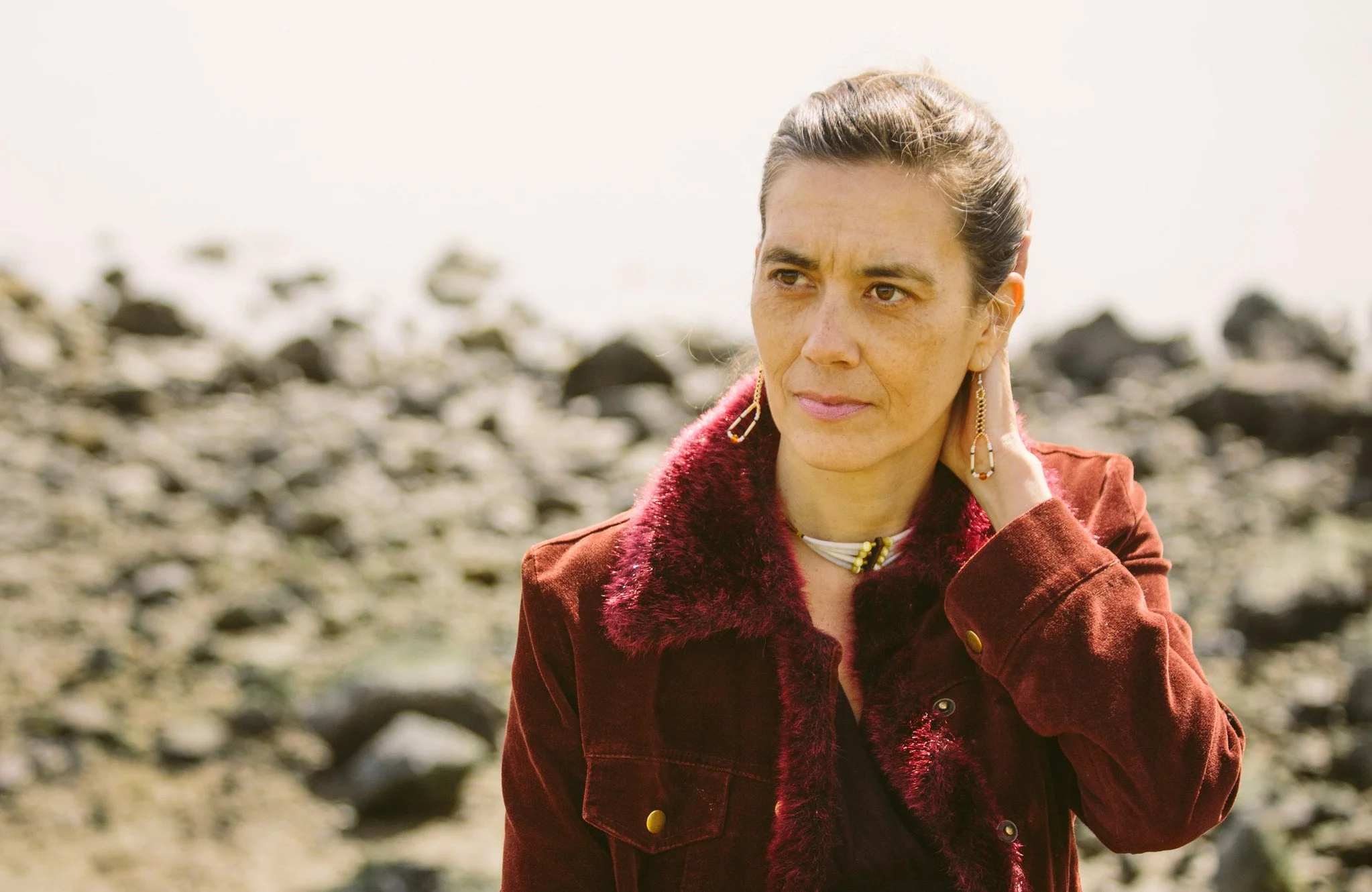
“I started writing when I was very young, with a journal, as soon as I could write, and my mom taught poetry in my kindergarten class. So I wrote a poem in kindergarten,” shares Alison, reminiscing sweetly. “Then, all of a sudden, I fell in love with the stage when I was ten. So I got really into this stage thing, the acting thing.”
This newfound dream eventually led the young star to the stage of NYU Tisch, to work within the Michael Chekhov studio (no longer in existence) and become a professional actress. “What excited me the most about acting was the internal work and the drama, and the words, and writers, like Tennessee Williams; I love his work. So poetic, so internal, so emotionally driven, character driven, and that's… that's where I was driven.”
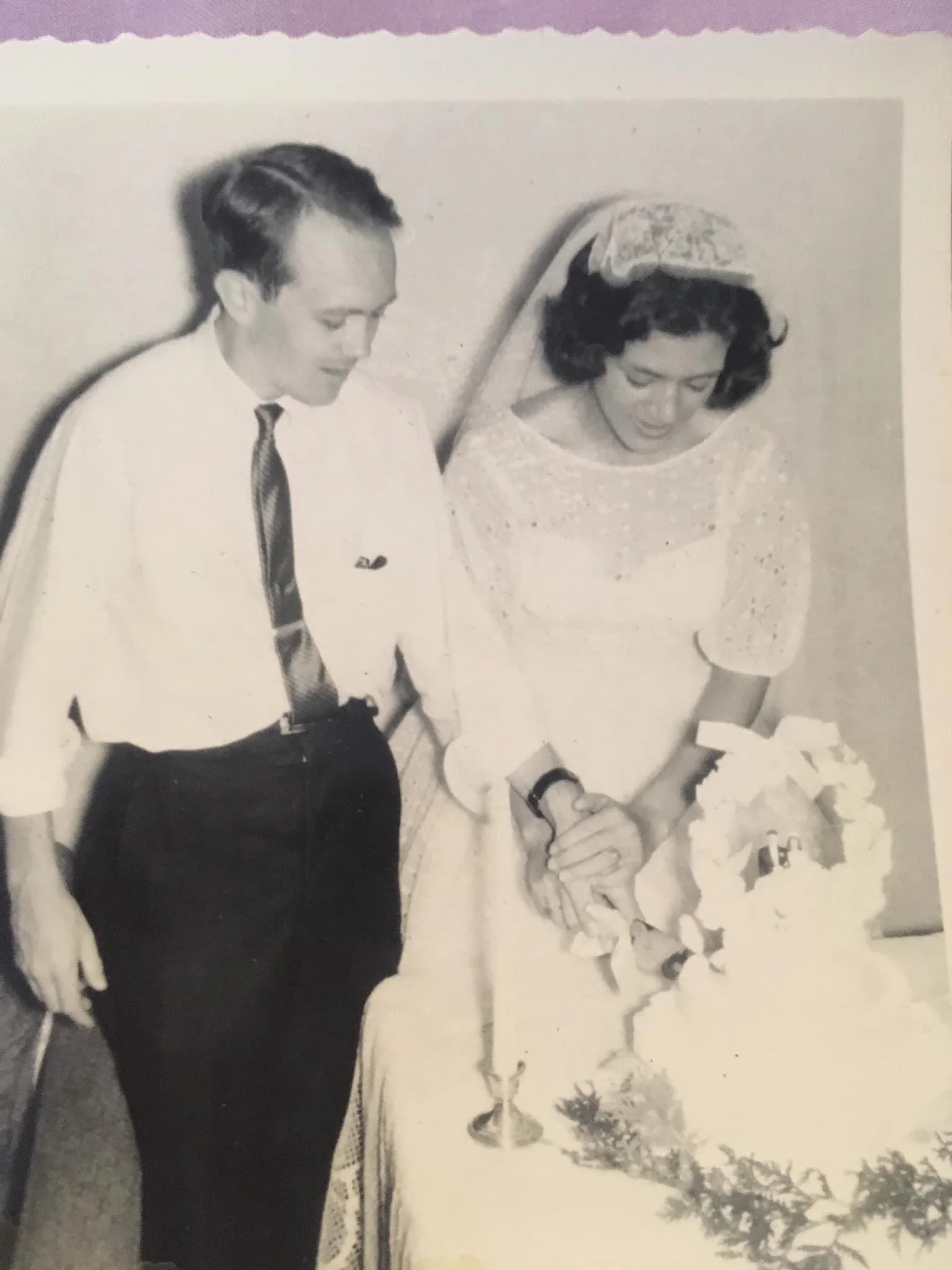
John Terrell & Mary Terrell (1958) Married in Portland, Maine
Having ingested so much spectacular writing as an actor, the brilliance of the material from her scenes and plays began to flow through her, and eventually out of her. “I wrote a play, right when I kind of was giving up on it, and I would write monologues and go to auditions, and they'd say, ‘Oh, who wrote that?’ And I’d say, ‘Yeah, I did,’” she shares.
“I'm still leaning heavily on my mom's ancestors, Black, Irish and Native Americans from Maine," shares Alison. “We would say, Mom, why don't you write? No, she was writing other scholarly works, you know?” Alison then recalls her mother Mary’s passing away quite young, at the age of only seventy-four. “I just had this sense that, okay, I need to write this. This is not just for me, but it's also for me to honor her, honor our ancestors.” Acknowledging the struggles that her ancestors likely endured, and the history that took place, is a call Alison chose to answer.
“I do feel like this is life's work, to put a light on my ancestors that didn't have a voice,” she shares. “How the system of white supremacy and violence, the system, how it gets pushed through in this country, and once the truth, the history is out in the air, you can't push it back. We aren't a monolith. No group is. And from our lens, we get to see the games.”
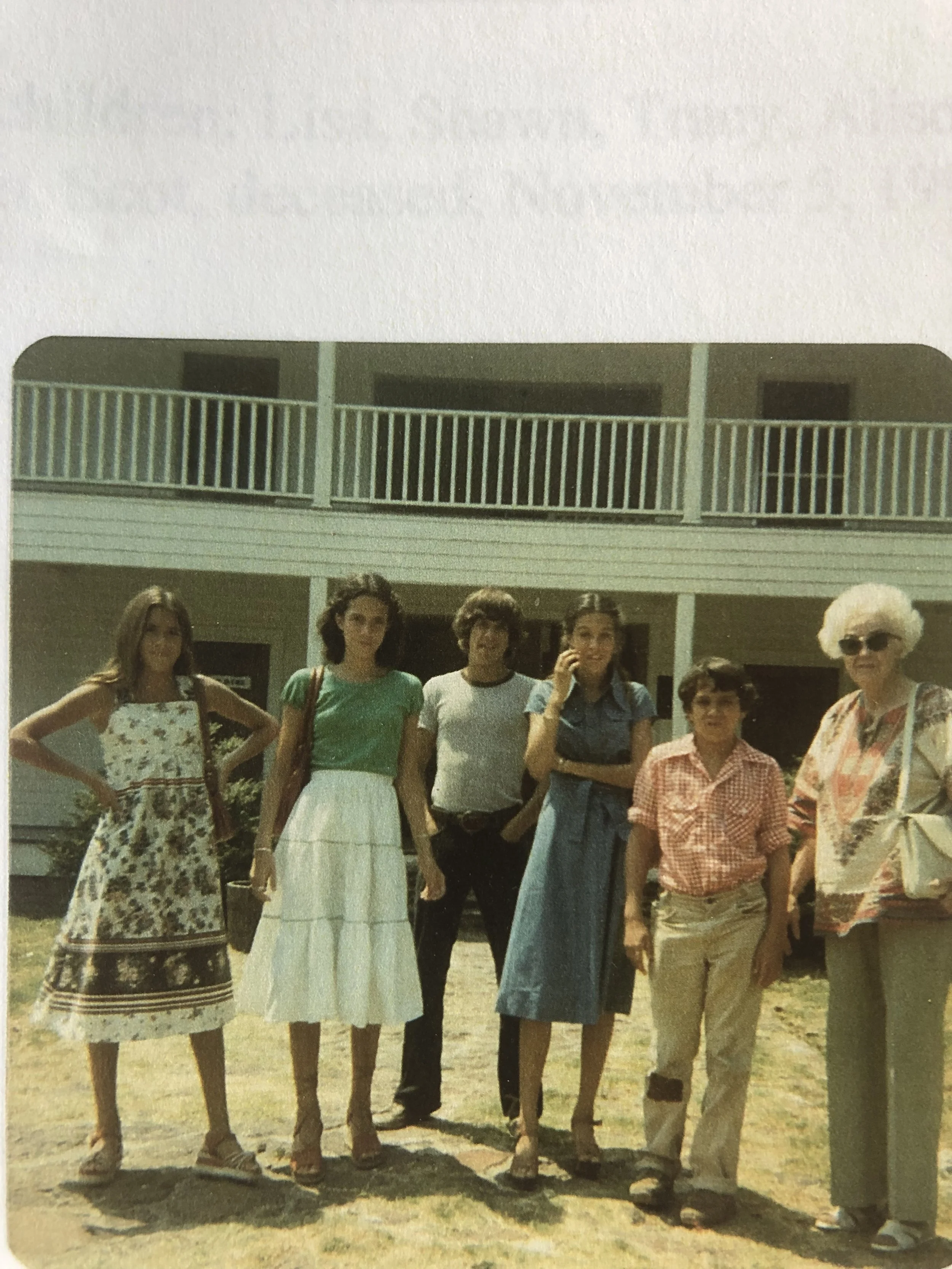
Alison’s siblings & Grandmother Mary, fathers mother in Arkansas
As a descendant of these stories, Alison has acquired an intuitive sensitivity to the environments around her, while emphasizing the importance of personal discernment. “That's part of just being human. We want to belong, right? Yeah, and so the journey can be very painful,” she shares, returning to a distant but difficult memory of visiting her father’s extended family in Arkansas, inspiring a notable scene in Mostly White.
“But that still is part of the story. My grandmother, Mary, has the same name as my mom. I have good memories of her. She was kind of spunky, and she was definitely Irish. Scottish, too,” she shares. “She had very humble beginnings. I'm named after her, Mary Hart; Hart is my literal middle name. She was a teacher. She was just kind of a free spirit, she kind of had a sense of humor. And she talked to me about Jesus all the time.”
For Hart, acknowledging the pain of the past could never take away the gifts we can share with each other now. “What I've gleaned is… just this strength and wisdom, just knowing that I define myself. It doesn't come from somebody else saying you're this or that, right? I mean, I could see a lot of mixed people having that experience, of people thinking they have the right to define us. It's super complex, full of nuance. My family is all colors. We have everybody.” Since answering the call to write, Alison Hart has come to attract an abundance of healing moments; in fact, it was the experience of writing Mostly White through which she brought her entire family together. Especially the moments she shared with her sister, Lisa.
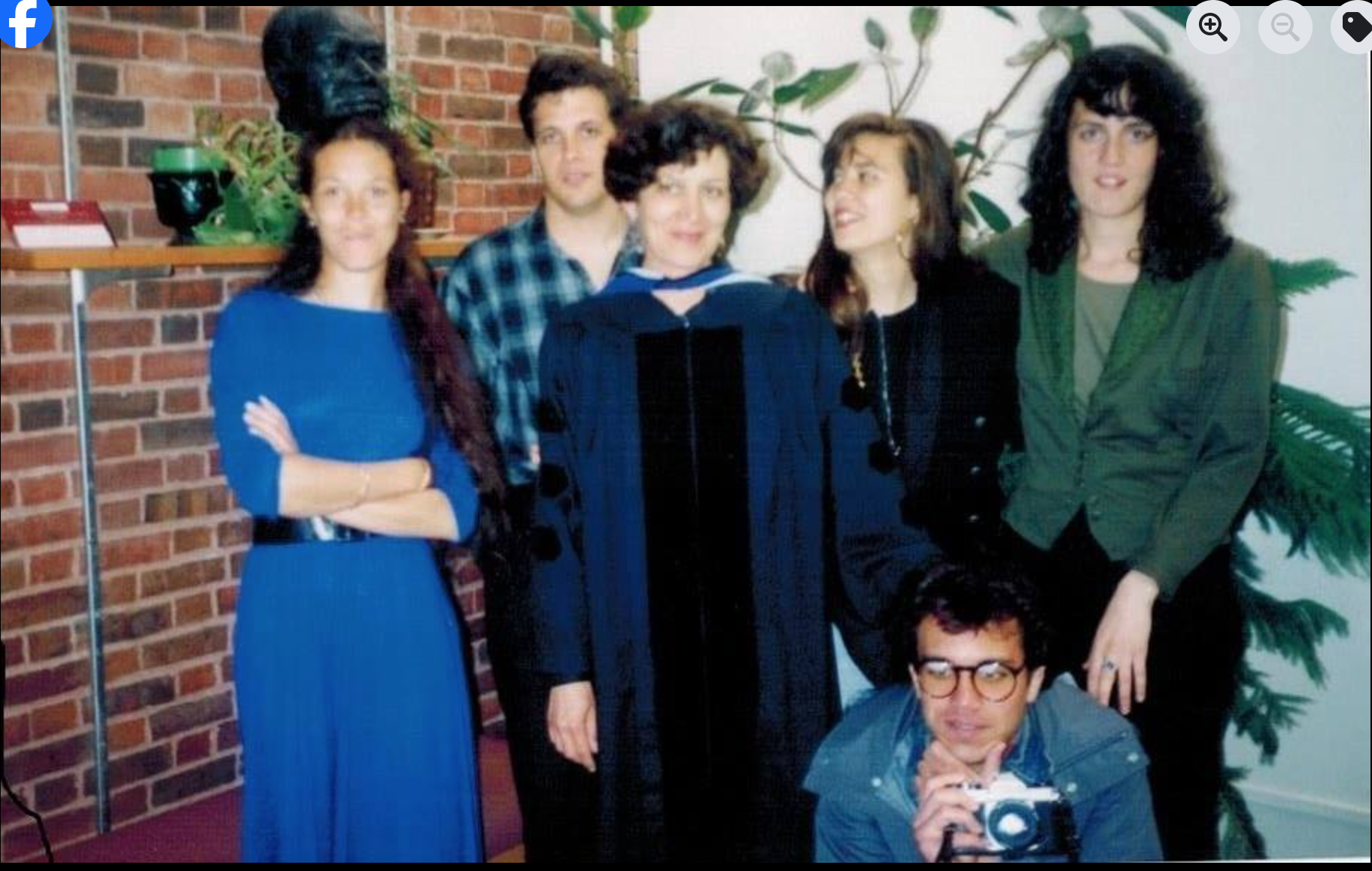
Lisa Terrell, Shawn Terrell, Mary Terrell, Alison Hart, Tracy Terrell, Scot Terrell
“She's just non-stop researching stuff,” says Hart, describing their creative process as a team. “And then she'll tell me things, all through writing, and I'd send her some stuff to read. And I did that with this one too, The In-Between Sky. And she said, ‘Oh yeah, make sure you mention In-Between, because the title is really for mixed people… because it's about being in between.’ I said, ‘Yeah, alright.’ It's true. It is very true,” she admits. “Lisa rides horses, and she trains them. She taught me how to ride.”
Alison shares that as a teacher, her sister Lisa has spent most of her life interfacing in the world of equestrianism. “She's really tough, and she knows how to read a room, I tell you,” Alison says.
In fact, it was Lisa who inspired the character Joan in Mostly White. Similarly, their mother Mary had been the inspiration for the character of Margaret. “My mom was Black, Native American and Irish,” she begins, “but the thing was, my mother was cut off from her family. So we didn't really know our cousins until much later.” Alison recalls it being not likely until she entered her thirties. “And then, with the book actually, Mostly White, cousins started contacting me, and then I did a reading in Maine. And then we had a reunion in a bookstore,” shares Hart.
“We find out later, me and Lisa, that our ancestor, John Freeman, who was black and native, fought in the American Revolution,” Alison shares. “We found that this ancestor, John Freeman, was enslaved prior to the American Revolution. Their family was enslaved in Ipswich, Massachusetts, next to these beautiful colonial houses, right?” Hart remembers the parades they would have every year for the Fourth of July—a celebration of freedom—alongside old and opulent homes. Pondering the irony of the image, she asks herself: Who built the house? Who was serving the people in the house? Even still, she found a way to make the most of her findings.
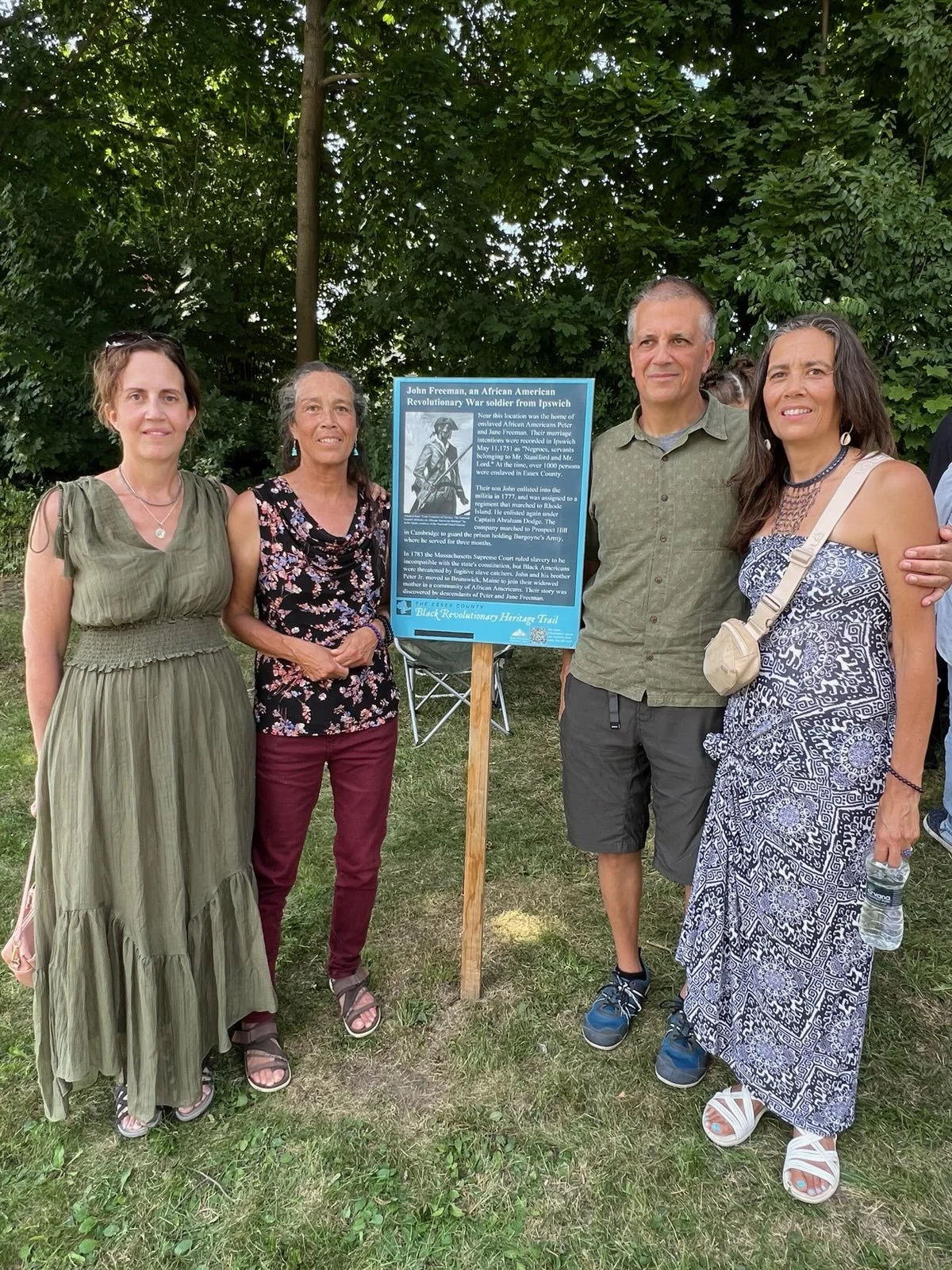
Honoring ancestors John Freeman and family in Ipswich, Massachusetts
“We connected with Gordon Harris, who was a town historian. And then the town created a plaque for John Freeman. Brought the whole family there, all the cousins, people came together from Maine, a lot of people, and came together and celebrated John Freeman and the Freeman family,” Alison shares.
When asked about the advice she has for young people of the Black & Irish diaspora, Alison offered the image of the Sankofa, a West African bird which gracefully arches its body to create a backward-facing arc.
“So it's looking back. You go back and you get what's gonna help you, or what the medicine is, or what the gifts are. I feel that when we look back at our ancestors' journeys, then we can find there's some medicine, there's some gifts that can really help us,” Hart beams. “If you can't get information from your elders, look to history, because it will provide context. What happened for me when I was looking at the intergenerational trauma, the historical trauma thread through my family, is it really depersonalized a lot, and helped me understand more of why my mom was the way she was. I think I realized that it's bigger than just me,” she reveals.
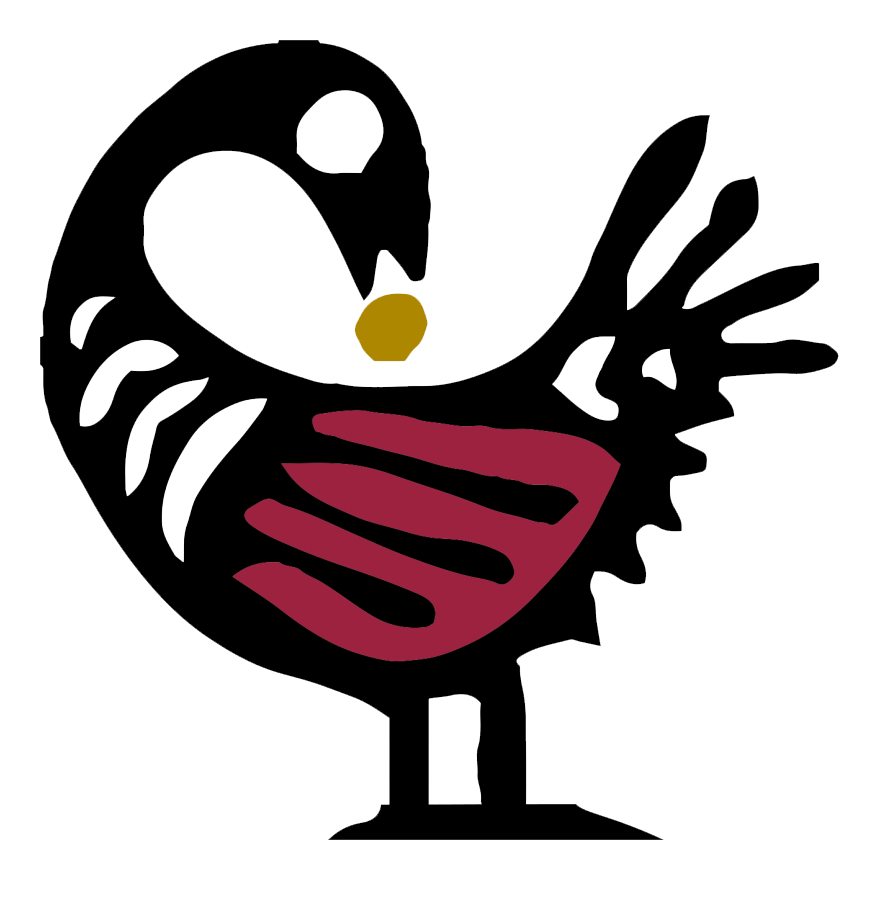
“There's some freedom in realizing it goes way back, and we're all kind of doing our best with it. So I think, look back to move forward. Like Sankofa.”
You can purchase Hart’s latest novels at Alison’s website: https://www.ahartworks.com/
The In-Between Sky at Mumblers Press: https://mumblerspress.com/alison-hart
Mostly White at Torrey House Press: https://www.torreyhouse.org/mostly-white
“I mean, again, everybody's everyone. I like to write that there are no heroes in my books. Everybody's a mess. I do like to write from that place, because it just shows we're all just human.”