
Victor McCrary: Technology Leader Shares his Black and Irish Story
by Mary Hendriksen
November 20,2026
The list of is long and distinguished for Victor McCrary, Ph.D., a chemist, innovator and producer who has engaged in America’s research agenda his entire professional life—in industry, government, and academia.
Currently, McCrary is the Vice Provost for National Security Innovation at The Catholic University of America. He is also a member of the advisory board for the African American Irish Diaspora Network—an organization he first encountered while exploring his Irish heritage
A Distinguished Career in Chemistry and Innovation—in Industry, Government, and Academia
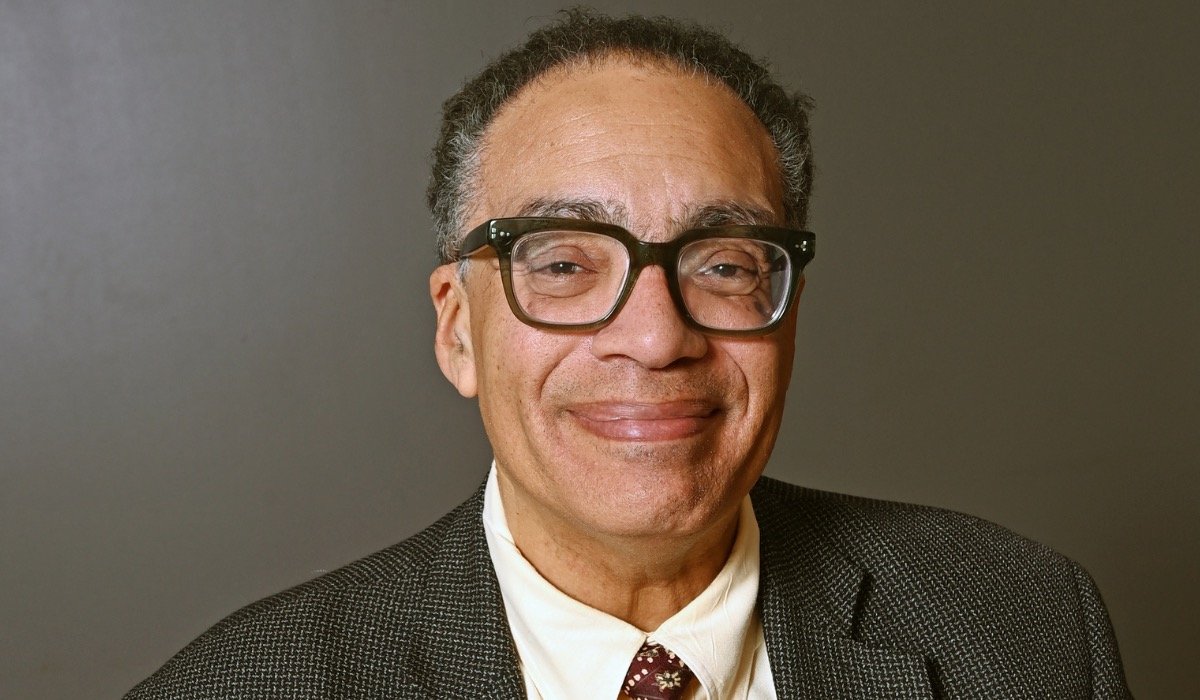
McCrary received his bachelor’s degree in chemistry from The Catholic University of America in 1978, followed by his PhD in chemistry from Howard University. He later added an executive master’s degree of engineering from the University of Pennsylvania.
His career focus has been basic and applied research in laser spectroscopy, semiconductors, convergent information systems, and technologies for national security applications. He has held research leadership positions at AT&T’s Bell Labs, the Johns Hopkins University Applied Physics Laboratory, the National Institute of Standards and Technology, Morgan State University, University of Tennessee, the University of the District of Columbia, and now The Catholic University of America.
In addition, McCrary served two terms as a member of the National Science Board, an entity designed to support America’s overall research ecosystem (recently disbanded in April 2026). He was elected chair of the Board in April 2025. One of his goals on the Board was an emphasis on developing the nation’s domestic STEM skilled technical workforce.
“It’s about using both your hands and your mind to solve problems (e.g. cyber, electrical, plumbing, welding) that are needed for today’s technological infrastructural ecosystem,” McCrary explains.
In 2011, McCrary was honored as Scientist of the Year by the Annual Black Engineer of the Year Award (BEYA) STEM Conference for his leadership in basic research investments for national security. He was a co-recipient of the Department of Commerce’s Gold Medal in 2000 for his efforts in developing the initial industry standards for the electronic book industry, which is now over a $50B industry globally. He has served as the president of the National Organization for the Professional Advancement of Black Chemists and Chemical Engineers and is a Fellow of the American Chemical Society and a Fellow of the American Association for the Advancement of Science. He is a 4th degree Knight of Columbus.
At Catholic University, McCrary leads the University’s efforts to build a robust ecosystem and reputation in national security from research, workforce development, technology commercialization, and strategic partnerships. He works internally across the University with faculty to champion their research within the sphere of national security—both within the government and industry.
Connection with his Irish ancestry
On the personal side, McCrary has a fascinating “Irish story”—one he began to discover in the Year 2000, when he was 45 years of age.
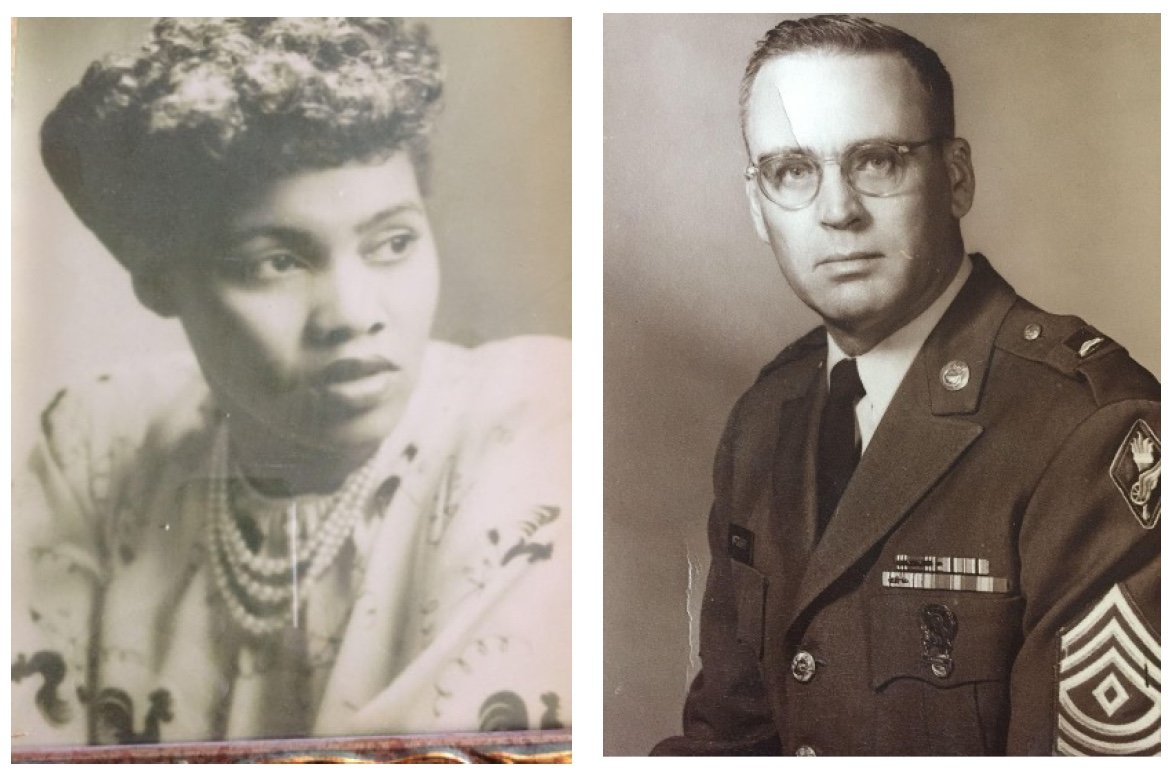
McCrary long knew the outlines of the story of his own nuclear family: He was born in Baltimore to Victor McCrary, Sr. and Dorothy Juanita (Williams) McCrary. They met during the Korean War at Fort Clayton in the Panama Canal Zone. She was a first lieutenant with the Army Nurses Corps. He was an Army master sergeant who was soon promoted to first sergeant. They married, moved to the Washington, D.C. area, and welcomed three children.
Sadly, in 1963, Victor Sr. died at age 43, just two days short of retiring from the Army. McCrary was only 8 years old.
“You are now the man of the house,” his mother told him.
Fast forward to the year 2000, when McCrary received—out of the blue—a call from his father’s brother, Mike, and his daughter, Jeri, who lived in Plano, Texas. They had lost touch with McCrary’s family after his father’s death; yet, with the advantages to genealogy offered by the internet, they were able to trace him when working on constructing a family tree.
Connections were made, family reunions attended, and McCrary learned that he had an Irish forebear: Matthew McCrary, born in 1798 in South Carolina.
As can often happen with family discoveries, there were a few surprises.
“To a life-long Catholic and alumnus of Catholic University,” says McCrary, “one surprise was that the McCrary family was Protestant. My siblings and I were raised Catholic because my mother chose for us to attend Catholic schools after a few years in the local public schools and then later we were baptized as Catholic. I recently found out my mother took a nursing class in the late ‘40’s at Catholic University – coincidence?”
Another was that McCrary’s great grandfather, Smith Sanford McCrary, fought for the Confederacy in the Mississippi Cavalry.
Wanting to know more of his Irish roots, after the initial contact with his cousin, McCrary met his other relatives through a series of family gatherings in Texas from 2001 - 2010. He also has relatives on his father's side in Nebraska and California.
He met AAIDN’s founder, Dennis Brownlee, at the Irish Embassy’s annual Bloomsday event in June 2023—a serendipitous encounter that marked the start of his involvement with the organization.
McCrary is now a member of AAIDN’s Advisory Board—established this past summer to provide strategic insight, cultural perspective, and community guidance as the organization continues to grow its impact through education, entrepreneurship, and cultural connection.
He is fascinated—and inspired—by intersections between African Americans and Irish Americans. “Despite some controversy as of late about how we perceive the concept of diversity, equality, and inclusion,” he says, “there is real magic in how people from diverse populations have worked together in the United States. I want to be a part of that and to tell that story. Ultimately, it is a story of America and the secret to America’s promising future.”